

You have probably seen many advertisements for fuel injector service and cleaning from your local auto repair shops, and you may wonder whether it is really necessary. A fuel injector service and cleaning can improve fuel efficiency, reduce emissions, and restore lost performance for some vehicles. Luckily, most low-mileage and well-maintained cars and trucks probably don’t need a fuel injector service. However, when drivers have fuel injector problems, they can’t be ignored. When it happens, selecting the right service for your car is essential. When improperly selected or if performed by an unqualified technician, a fuel injector service can even cause more harm than good. It’s therefore of the utmost importance to know when a fuel injector service is necessary, what the pros and cons are of different types of service, and which one would give you the most bang for your buck.
What is a Fuel Injector Service?
Fuel injectors are precision components that will spray a fine mist of fuel into the intake manifold or combustion chamber. To create the best possible explosion in the engine, an optimal air/fuel mixture must be achieved. To do that, the injectors need to be in good working condition. Your engine is designed to run on a specific mixture, controlled by the vehicle’s powertrain control module. When dirt prevents the fuel injectors from producing a fine mist of fuel, a service is required. You will find that repair shops offer several services at different prices. A fuel injector service is also highly recommended when you change your fuel filter.
Types of Fuel Injector Service
There are several ways to clean fuel injectors. While some fuel injector cleaners can improve how your car runs, others may also cause other problems to develop.
Over-the-Counter Fuel Injector Cleaners
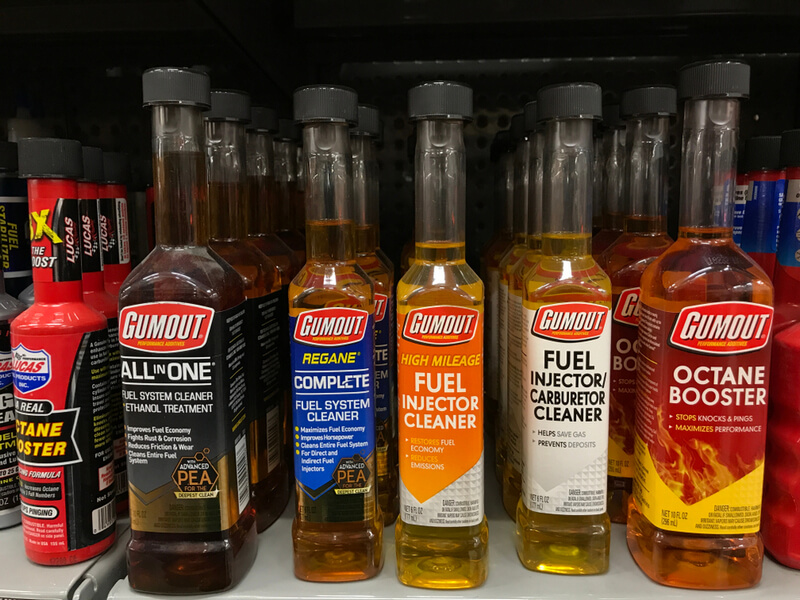
A trip to your local auto parts store will show you that there are hundreds of companies out there making fuel injector cleaners. These fuel injector cleaners break down carbon deposits and shellac that build up on your injectors and prevent them from spraying correctly. Many manufacturers claim you will experience increased fuel efficiency. Others claim their product will extend the life of your engine, help to pass emissions inspections, and make your car run smoother.
While these cleaners usually work fine, the results rarely meet the manufacturers’ claims. The reason why is very simple. These products work best as a maintenance procedure to prevent sludge and carbon deposits from building up on your fuel injectors rather than as cleaners intended to clean partially obstructed ones. Once deposits have begun to form, these cleaners can actually make problems worse.
InjectorRx.com tested an over-the-counter injector cleaner and found it caused significant problems when used on an older, high-mileage vehicle. Instead of providing a smooth-running engine and increased fuel mileage, the test car became undrivable. It experienced significant leaks and blockages from the fuel injectors after using the cleaner.
The mechanics at InjectorRx theorize that the cleaner caused problems because it breaks down the deposits but does not have time to dissolve them completely, leaving particles trapped in the microfilter within the injector. In testing, the injectors not only performed worse after cleaning but also started leaking.
However, when used as part of a regular maintenance schedule, these injector cleaners help prevent buildup or debris from collecting in the injectors, reducing the risk of needing a more serious, expensive injector service in the future.
Fuel Rail Cleaning
The most common service offered by repair shops for cleaning fuel injectors is a fuel injector flush. This procedure requires the mechanic to install a machine that pumps cleaning agents through the fuel system without removing the fuel injectors. Like the over-the-counter cleaner, this service promises increased fuel mileage and lower emissions.
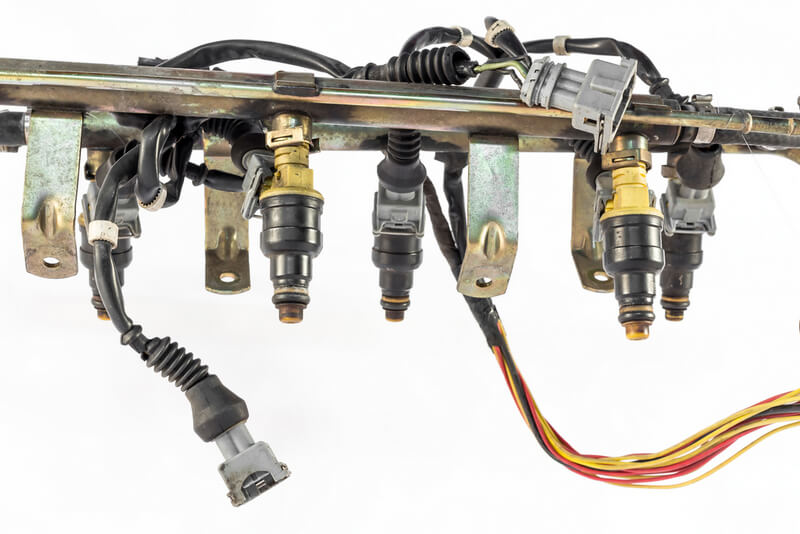
In the same test conducted by InjectorRx.com, a fuel rail and injector cleaning procedure produced some startling results. This cleaning procedure involves a high-pressure pump that forces cleaner through the injectors. The service is supposed to allow cleaning without removing the fuel injectors from the fuel rail.
The mechanics at injector Rx.com found that high-pressure cleaning caused significant problems and actually damaged some of the injectors. The reason is that the high-pressure pump can dislodge larger particles. The high-pressure pump forced bits of carbon into the injector. It damaged the injector, and it had to be replaced. In fact, the mechanics found that the injectors, which had not leaked before the service began, leaked afterward, necessitating their removal.
Sonic Fuel Injector Cleaning Service
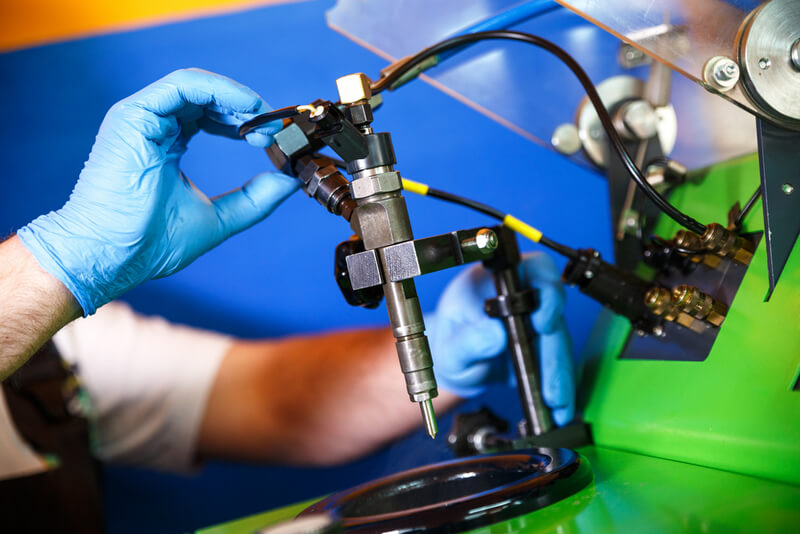
A sonic cleaning service requires the fuel injectors to be removed from the vehicle and placed in a bath of cleaning solvents. The solvents are then stimulated by ultrasonic sound waves, causing the deposits to fall off. Once the injectors are cleaned, they are placed on a tool used by the mechanic to ensure they flow correctly. The flow testing procedure will also indicate whether the injector’s seals and filters need to be replaced. Once all the injectors are properly tested, they are reinstalled in the car.
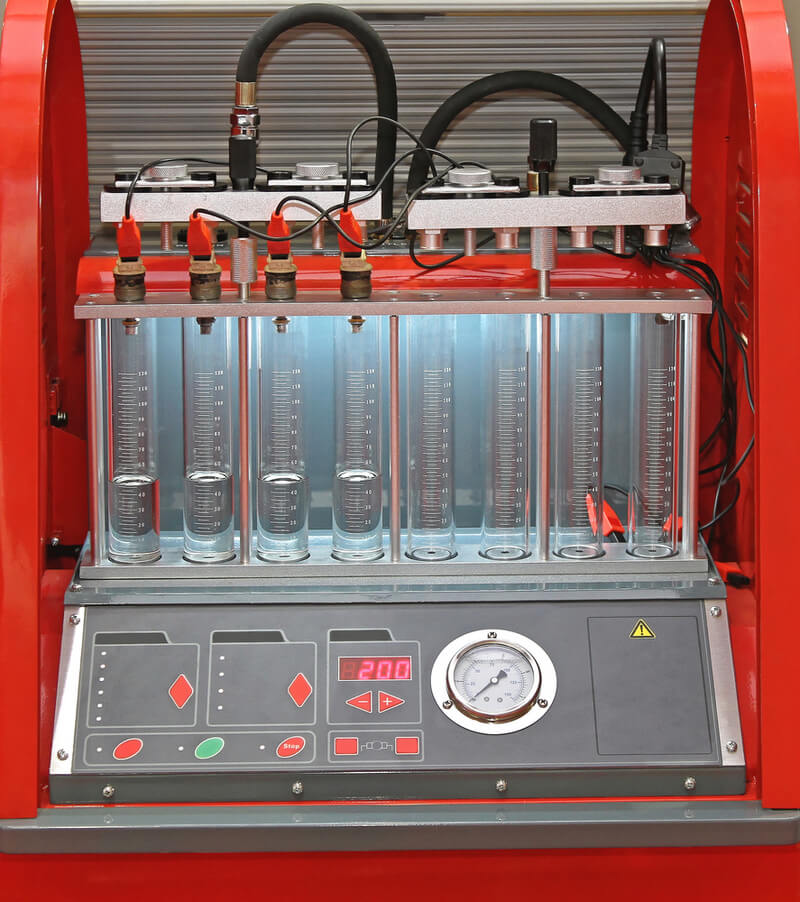
InjectorRx.com found that this procedure worked exceptionally well on the test engine. The mechanics recorded an increase in fuel mileage from 12.7 mpg to 20.1 mpg – about an 80% increase in fuel mileage. Horsepower on the test engine increased from 72 hp to 87 hp, and emissions stayed within the required limits.
The Costs of a Fuel Injector Cleaning
You can expect to pay between $10 and $20 for an over-the-counter fuel injector cleaner that you add to your fuel tank.
A fuel rail cleaning service performed by a local repair shop will cost between $200 and $350. The service typically takes less than two hours to perform. This service may provide quicker results than an over-the-counter solution, but it carries the most significant risk of causing additional damage.
Ultrasonic cleaning can cost about $100 per injector. You will have to remove the fuel injectors from your car. You can send the fuel injectors to a specialized shop for cleaning. This process takes the longest, often leaving your vehicle undrivable for several days, sometimes up to two weeks. However, ultrasonic cleaning and bench-flow testing are the only ways to ensure that dirty injectors are thoroughly cleaned.
The Pros and Cons of Each Type of Service
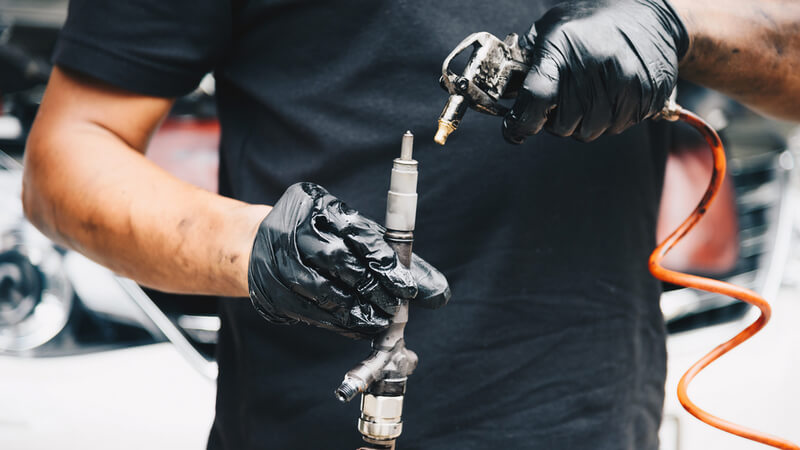
There are certain advantages and disadvantages associated with each type of service. There are also practical considerations drivers should consider before deciding to service their fuel injectors.
Pros and Cons of Additives
Drivers using over-the-counter cleaning solutions for fuel injectors should be aware of the potential risks associated with these chemicals. The fuel injector cleaners you can buy at the auto parts store will remove deposits and build-up. Owners of many modern cars are unlikely to notice any performance problems until the check engine light comes on.
Owners who use a cleaning solution to solve the signs of a bad fuel injector can run into some common problems. The solvents owners use can loosen larger particles of build-up. These pieces can become lodged in the fuel injector nozzles. Clogged fuel injectors can make the car hard to start and cause high emissions.
It is best to use additives sparingly and to avoid using them on high-mileage vehicles that have not been properly serviced. Additives are ideal as a maintenance item, though, and owners of newer, low-mileage cars should consider using a fuel injector cleaner once a year along with purchasing Top Tier fuel that offers excellent detergent properties.
Pros and Cons of Fuel Rail Service
Pressurized cleaning can do a much better job of getting your injectors clean in a short period. It is much more expensive than a fuel additive.
However, pressurized cleaning can cause extensive damage to fuel injectors by forcing debris into and through them. On some occasions, this might cause injectors to leak, and they will need to be replaced. Owners of older, high-mileage cars without a service history should be cautious about having a pressurized service performed.
It might be recommended for drivers of well-maintained cars to have a pressurized fuel injector service every few years to prevent long-term problems.
Pros and Cons of Ultrasonic Cleaning
Ultrasonic cleaning is costly. The procedure also requires extensive work. It can take up to two weeks to complete, depending on how long you need to wait for the injectors to return from the specialized shop.
Nonetheless, ultrasonic cleaning is the only way to clean old, dirty injectors. When companies conduct ultrasonic cleaning, they will also flow-test the injector to ensure it is working correctly. They change O-rings and filters so your injectors are like new.
Last Words
So… Is a fuel injector service vital for your car? Well, it depends!
Drivers should always be wary of too-good-to-be-true claims from manufacturers of chemical solutions to mechanical problems in cars. Fuel injector cleaners can help prolong the life of your injectors. But you should not rely on them as a solution for neglected, old, and filthy fuel injectors.
You should ask some questions to the service manager of repair shops that advertise for pressurized service. The driver should ask about how the shop handles an injector clog or leak after the service. You should make sure the shop won’t leave you with a massive repair bill for a service you may not even need.
When you have a high-mileage vehicle that is running poorly, failing emissions tests, and showing signs of bad fuel injectors, you should consider an ultrasonic cleaning. You can save some money by removing and reinstalling your fuel injectors yourself.
If you’re unsure how to do that, just make sure you get your hands on a high-quality repair manual for your vehicle. Your workshop manual will show you the correct steps to take to remove and service your fuel injectors.
And when in doubt, never forget that nothing beats a piece of advice from a trustworthy mechanic!