
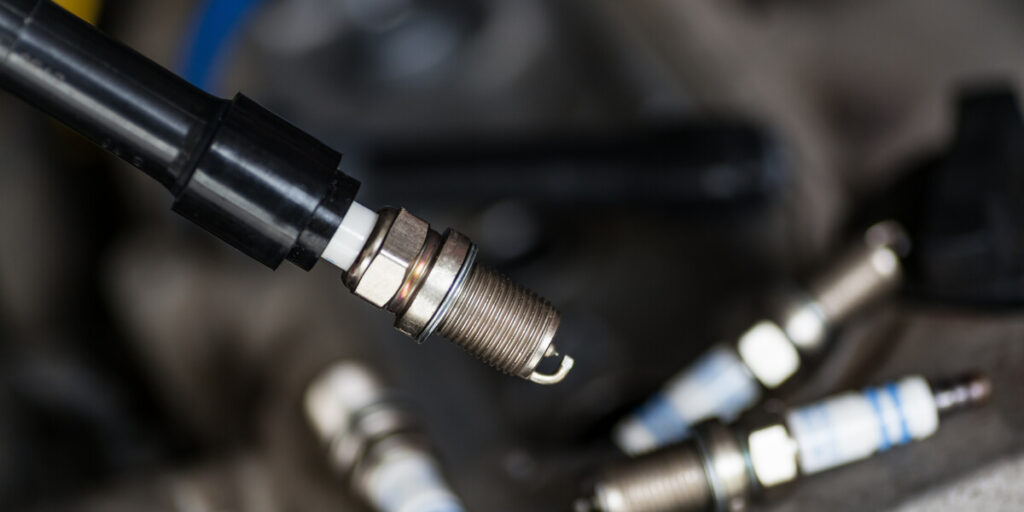
DespDespite the recent push for electric vehicles, we are still primarily reliant on cars with internal, combustion engines. This type of engine combusts gasoline or diesel fuel to produce power and move your vehicle forward. However, gasoline and diesel engines differ in the way they ignite the fuel. While diesel fuel ignites with pressure, gasoline ignites with the help of spark plugs. These small parts may seem insignificant, but they are essential for the smooth running of your engine. That said, spark plugs wear out with time and will need to be replaced at some point. Luckily, spark plugs don’t cost much, and you can even replace them with only basic tools and simple auto mechanics knowledge.
There are several reasons you might want to replace your car’s spark plugs. The most obvious one is ensuring that the engine runs properly. During use, the plugs can become dirty and accumulate fuel combustion deposits. When spark plugs wear out, they can’t ignite the fuel properly, and you may feel a loss of power, encounter engine misfires, and reduced fuel efficiency. If you wait even longer, the engine will become rough at idle, risk stalling under load, and even worse, it might not start at all. When it happens, the check engine light (CEL) might light up or start blinking on your dashboard.
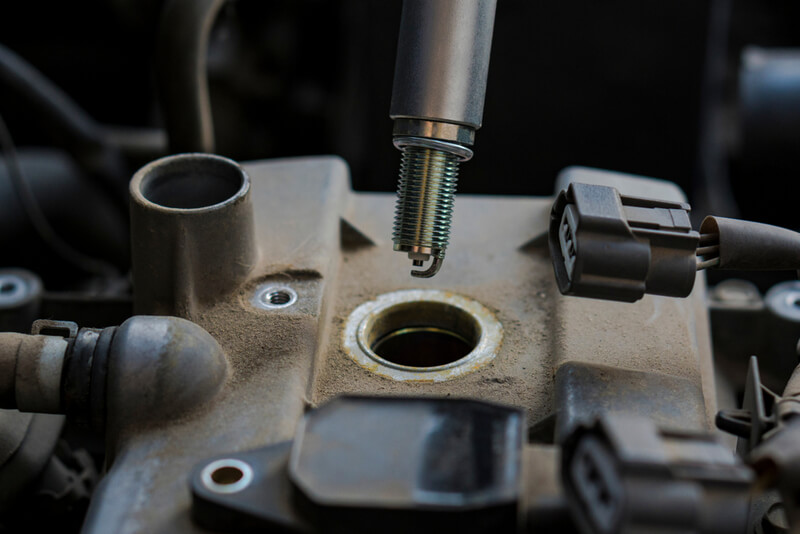
You can easily prevent all of these issues by replacing the spark plugs on time. Spark plugs aren’t free, of course. Nonetheless, you might spend even more money on fuel running your car around with old spark plugs in. Here are a couple of hints and advice to help you save money on spark plug replacement and ensure you get the most bang for your buck.
Spark Plug Replacement Cost
Replacing the spark plugs on your car is often inexpensive. However, the total cost of the replacement will depend on factors such as the type of spark plugs, the labor rate charged by your auto repair shop, and the car model.
That being said, more expensive spark plugs usually perform better. More importantly, expensive plugs also last longer and might be more cost-effective in the long run. Below are the most popular spark plug types, along with a description of how various factors can influence the total cost of your spark plug replacement.
Copper Spark Plugs
Copper spark plugs are the cheapest option on the market, starting at around $5 each. They use copper for the electrode and nickel-alloy for the ground electrode. The problem with these models is that they don’t last very long, mainly because the nickel-based alloy is soft and wears out quickly.
The highest-quality copper-based spark plugs last around 25,000 miles. In other words, even though they are cheap to buy, you’ll be replacing them more frequently.
That said, copper models are still helpful for performance engines. Thanks to excellent heat dissipation, the risk of misfiring with these spark plugs is minimal. Also, copper models apply to older engines with a low-voltage distributor-based ignition system. They don’t work very well with high-voltage distributor-less ignition systems, though.

Platinum Spark Plugs
Platinum is a much more expensive metal than a nickel-based alloy. Consequently, platinum plugs tend to cost a little more (about $10). In these models, platinum is used instead of the nickel alloy for the ground electrode. Platinum is also more rigid and more durable than nickel-based alloys. Platinum plugs should last at least 50,000 miles, and some can reach 80,000 miles.
Generally, platinum spark plugs have worse heat dissipation than copper models. That quality makes them useful for modern fuel-efficient engines with a high-voltage distributor-less ignition system. That said, high-performing engines that work with “colder plugs” might not work well with platinum models. Nonetheless, we recommend checking the owner’s manual to see if the manufacturer recommends platinum plugs. If the answer is yes, then you shouldn’t use copper plugs in your motor.
On some new vehicles, manufacturers recommend using double-platinum models. These plugs use platinum on both electrodes and generate two sparks. Don’t worry, the second spark happens during the exhaust cycle and won’t ignite any fuel.
Iridium Spark Plugs
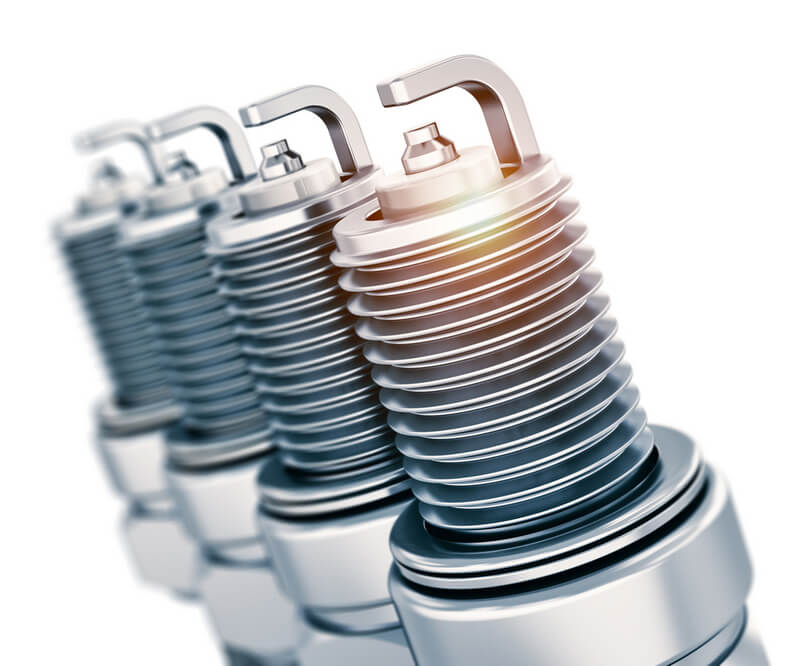
If money is not a concern, we recommend going for iridium spark plugs (over $10 for basic versions). These models are the most expensive due to the higher price of iridium compared to platinum or nickel alloys. That said, iridium is also more complex than both platinum and nickel-alloy, which makes these plugs extremely durable.
The best iridium models on sale today last up to 100,000 miles. In other words, you might pay more to replace these plugs, but you won’t need to replace them for the next 6-7 years, depending on your annual mileage.
Many modern cars require iridium spark plugs. If that’s the case with your vehicle, we strongly recommend replacing them only with iridium ones. Engines designed to work with iridium plugs won’t work as efficiently with platinum or copper plugs. That said, you can put iridium models in almost every motor and reap the durability benefits.
Vehicle Model
Not all cars are created equal, and the same goes for spark plugs. Some vehicles have different engine configurations that might make it a lot harder to reach and replace the spark plugs. If you own a car with a flat-four engine, like a Subaru Impreza, the plugs are located on either side of the engine, between the engine and the wheel well. In that case, there’s limited space to work, and removing and reinstalling the plugs will take much longer than on a conventional inline-four engine.
Another good example is cars powered by a V-engine. In this type of engine configuration, it’s not uncommon for one of the engine heads to be covered by the intake manifold. In this case, the intake manifold will need to be removed to access the spark plugs on that specific head. Hyundai Sonata 3.3L V6 and Dodge Caravan V6, to name a few, are built that way and will require more time to replace the spark plugs, thus increasing the total labor cost.
Obviously, the number of cylinders also affects the total cost of the replacement. An inline-four engine requires only 4 plugs, while a V8 requires 8. Vehicles equipped with dual-ignition systems, like the 1989 Ford Ranger and more recent Honda Fit equipped with the i-DSI system, will require 2 spark plugs per cylinder.
Where to Get Spark Plugs Changed?
Replacing the plugs in your car is very straightforward – any mechanic could do it. If your vehicle is still under warranty, you don’t especially have to have the plugs replaced by your dealer. No matter whether your car is under warranty or not, you are always allowed to choose your auto repair shop. However, if you decide not to do business with your accredited dealer, make sure to replace your plugs with the recommended ones and keep all maintenance invoices on hand. Doing so will prevent your dealer from voiding your warranty if something happens with your engine further down the road.
Some people will prefer to have only their dealer work on their car, and there are obviously some benefits to doing that. When the same dealer performs all your maintenance, they’ll have a record of your maintenance history in their system and can even remind you when it’s time to replace specific components. It’s also easier to have your warranty honored, since they already have all the invoices and proof of maintenance. However, it’s important to note that car dealers often charge higher labor rates, and OEM parts also cost more.
If your vehicle is no longer under warranty, we recommend taking it to a trustworthy independent auto repair shop. The quality of work would be the same, yet the price will be much lower. Independent auto mechanics charge around 30-40% less than dealerships.
Finally, you can also replace the spark plugs by yourself. This way, you’ll cut the cost of labor and only pay for the spark plugs.
How Long Does It Take to Replace Spark Plugs?
It all depends on how many plugs your engine has and how easy they are to reach.
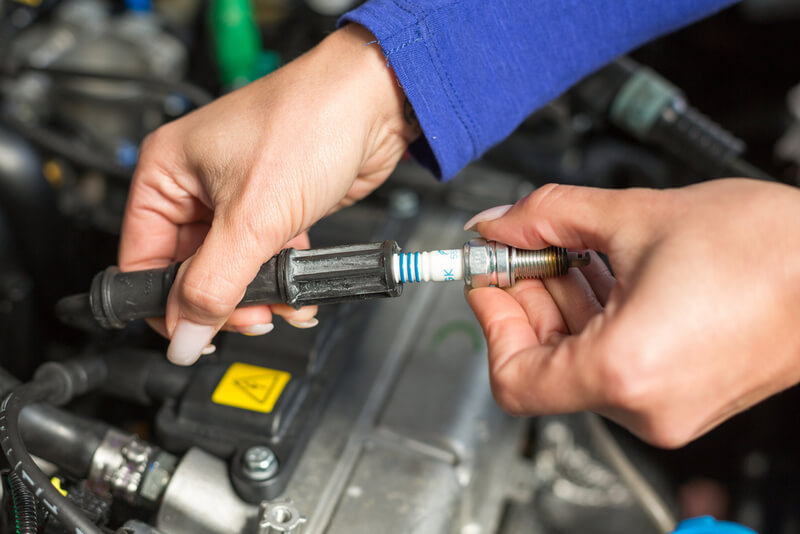
That said, if you have the right tools for the job, it should take 30 minutes to 2 hours. On most inline-four engines, you only need to remove the coil-on plugs or spark plug wires and unscrew the plugs. More recent vehicles, however, often require removing other components to access the plugs.
Obviously, the more cylinders, the more time it takes to replace the spark plugs.
When you have a doubt, please consult your vehicle’s repair manual to get a better idea of the manufacturer’s suggested flat replacement time. Needless to say, these flat times are calculated for certified auto mechanics. If you are a beginner, expect the replacement to take twice as long.
Better safe than sorry!
How Much Does It Cost to Replace 4 Spark Plugs?
Let’s do the math, considering everything that we’ve learned until now. The price of 4 spark plugs is around $20 to $100, depending on the material used. That is how much you’ll pay if you do the work yourself.
If you want to go to a dealership, the labor cost ranges from $100 to $150. The price of the plugs might also be higher at the dealership, but not by much. Usually, you will pay between $120 and $250 to have the plugs changed at a certified dealership.
If you decide to go with an independent repair shop, labor costs will range from $60 to $100. Add that to the price of the plugs, and you’re looking at a total of $80 to $200.
To Wrap It Up
The cost of replacing spark plugs might often seem high, but keeping your engine running is worth it; not replacing them might even cost you more. Underperforming spark plugs will significantly reduce your car’s fuel efficiency and may damage other internal components. When spark plugs don’t thoroughly burn all the fuel in the combustion chambers, the fumes can accumulate and clog your catalytic converter. Not to mention that once your engine stalls, you’ll also need to have it towed to the nearest auto repair shop. Replacing a catalytic converter or paying for a tow truck will easily exceed the cost of a quick spark plug replacement.
Never forget that omitting to keep your car well-maintained is rarely worth it in the long run.